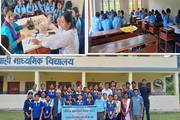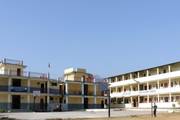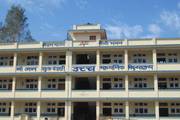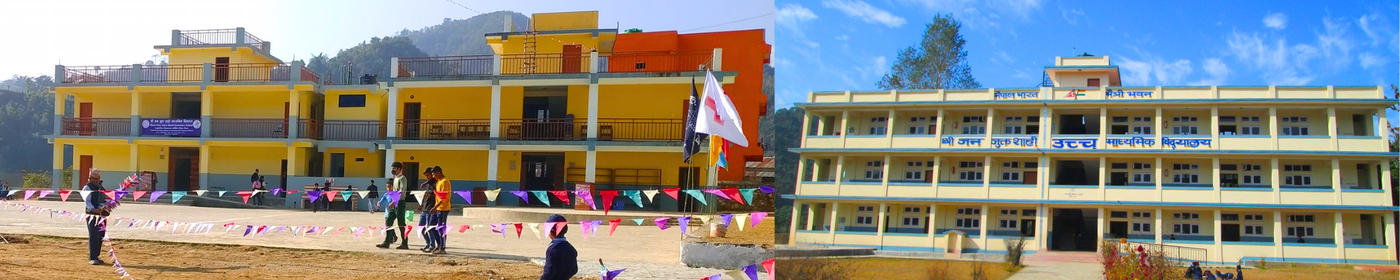

Shree Jana Jukta Shahi Secondary School, established in 2032 BS in Sange, Nepaltar, Vyas-5, Tanahun, offers classes from the Nursery through Grade 12. Affiliated with NEB, it provides Ten Plus Two programs in Management and Education. The school also offers a CTEVT-affiliated Diploma in Veterinary Science, serving students from Vyas Municipality and surrounding areas.
Level
Nursery-12 Co-ed Status
Co-ed
Boarding Status
Day Scholars
Salient Features
- Well-Managed Community School
Shree Jan Jukt Shahi Secondary School is a community-based institution steadily progressing toward becoming a fully systematic and well-managed school. Efforts are continuously made to improve governance and institutional development. A School Improvement Plan (SIP) is prepared and implemented to guide all development activities. - Clean Water and Toilet Facilities
The school has an adequate drinking water system. Toilets for students and staff are well-maintained and kept clean to ensure proper sanitation and hygiene. - Clean and Attractive Classrooms
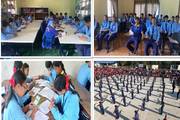
All classrooms are kept clean, well-organized, and visually appealing. This creates a positive and welcoming environment where students can focus on their studies. - Technology Integration
CCTV cameras have been partially installed on the school premises for security. In some classrooms, teachers and students are using smart boards, making lessons more interactive and engaging. - Qualified and Subject-Specific Teachers
The school has a team of qualified teachers who teach subjects aligned with their expertise. This ensures that students receive quality education across all subjects. Teachers prepare lesson plans and teaching plans before taking classes. Monthly staff meetings are held to discuss shortcomings and areas for improvement. - Regular Committee Formation
The School Management Committee and the Parent-Teacher Association are formed on time in accordance with the rules. Various other committees are also formed, including the Grievance Hearing Committee, the School-Community Relations Committee, the Sanitation and Discipline Committee, the Health Committee, and the Extracurricular Activities Committee. Joint meetings of teachers and committees are held at least twice a year for academic counseling. - Regular Financial Audits
Annual and periodic audits of the school's financial accounts are conducted regularly. This ensures transparency and proper use of resources. - Health and Safety Facilities
A first aid room is available at the school. Regular health checkup camps are organized at least once a year for all students to monitor their physical well-being and address health issues early. A guard is appointed to monitor mobile phone use, dress code, and maintain parent records. - Student Support and Scholarship
Scholarships are provided to students who are economically poor, meritorious, differently-abled, or orphaned (without father, mother, or both). A donation box is kept at school, and the collected funds are used for student welfare. - Annual Publication and Creative Writing
The school publishes one book every year. Creative and informative articles by students and teachers are published in the school's documents and magazines. This encourages a culture of reading and writing within the school. - Basic Facilities
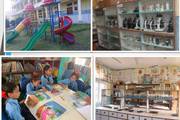
The school has a canteen that provides food and snacks. It also has a flower garden and rest areas (chautari) where students and visitors can sit and relax. - Practical Learning and Skill Development
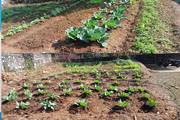
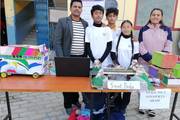
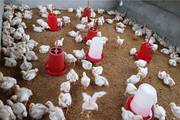
Under the "waiting and learning" initiative, students participate in practical activities including vegetable farming, mushroom cultivation, poultry farming, and pig farming. These programs help students learn life skills through hands-on experience. Students also learn to make traditional leaf plates (duna and tapari). - High Academic Achievement
The school maintains an academic achievement rate above 80 percent. This reflects the quality of teaching and the hard work of students and teachers. Examination results are reviewed and analyzed regularly to identify areas for improvement. - Annual Calendar and Academic Planning
A detailed annual calendar is prepared and followed throughout the year. This helps in the systematic planning and execution of all academic and extracurricular activities. Free periods are properly managed. - Discipline and Student Management
Morning and evening prayer sessions are held daily to promote discipline among students. A card system is used for student movement: a white card for going to the water fountain or the restroom, and a red card for visiting the administration for official work. Students must obtain permission from both the class teacher and the administration before leaving school during school hours. - Parent-School Communication
Class teachers directly call parents if a student remains absent. Parents are notified by phone on the day results are published for quarterly, mid-term, and annual exams. Parent gatherings and academic interactions are held separately by grade level. Home-visit programs are conducted twice a year to connect with parents and to understand students' home environments. - Value Education Programs
The school organizes parent education for guardians, moral education for students, and spiritual education for the community. - Student Leadership Development
School captains and assistant captains are selected through an election process. This helps develop students' social awareness and leadership skills. - Extracurricular Activities
Every Friday from 1:00 PM to 4:00 PM, students participate in extracurricular activities and sports. Felicitation programs are organized to honor teachers, parents, and students for their contributions and achievements. - Library Utilization
Each teacher conducts at least one class every 10 days in the library or e-library to encourage students' reading habits. - Feedback Mechanism
A suggestion box and notice board are used to share information and address feedback from students and parents. Suggestions received are addressed promptly.
Admission Guidelines
Student Admission Guidelines and Criteria
Classes 1 to 6
Admission for students in classes 1 to 6 is free.
Classes 7 to 12
For admission to classes 7 to 12, a fee set by the School Management Committee applies. Students have the option to pay this amount within one year.
Eligibility for the Diploma in Agriculture (Animal Science) program
- Students who have passed the SEE and completed 18 months of veterinary training are requested to contact the school.
Required Documents
- SEE Certificate,
- Mark sheet, and
- Photocopy of Citizenship
- Passport-size photos (3x4), 5 copies
SCHOLARSHIP INFORMATION
Scholarships are provided to students who are:
- Economically poor
- Meritorious
- Differently-abled
- Orphans (without father, mother, or both)
- Technical SchoolPublic
- National Examinations Board
- CTEVT
- Established 2032 B.S.
- +977 65-692224, 9746038424