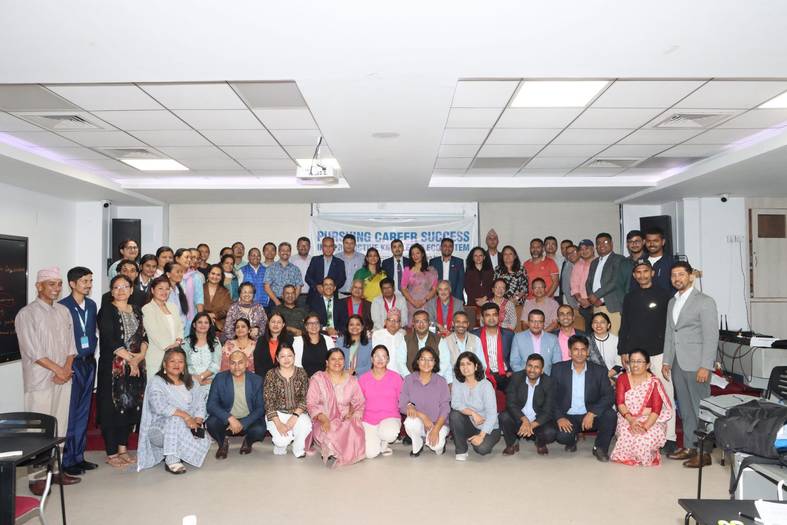

KATHMANDU – A workshop on fostering the relationship between academic knowledge and society has successfully concluded in Kathmandu. Titled "Productive Knowledge Ecosystem," the event brought together more than 60 educators from Tribhuvan, Purbanchal, Kathmandu, and Pokhara universities.
The workshop aimed to encourage critical analysis of knowledge ecology among higher education teachers, with activities focused on two key areas: research and the teaching-learning process. Organized by the TU Scholars Grassroots Community and coordinated with Stony Brook University in the U.S., the event was hosted at Kathmandu Model College (KMC) in Bagbazar.
A Call for Locally-Relevant Research
The chairman of the University Grants Commission (UGC), Prof. Dr. Dev Raj Adhikari, a key guest at the event, emphasized the need for teaching and research to connect knowledge production, application, and community. He noted that even internationally-published research often has little impact on local communities. He stressed that educators must focus on identifying local knowledge sources and ensuring their research yields tangible results. Dr. Adhikari also mentioned that the UGC is actively investing in the multi-faceted aspects of knowledge.
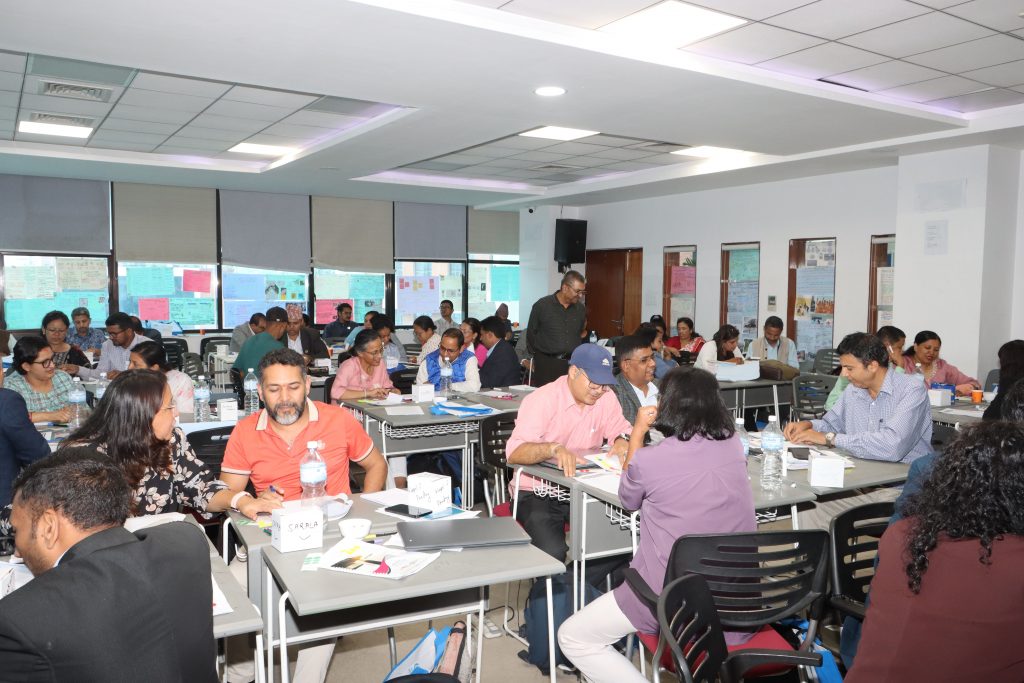
Participants raised questions about the role of academics in research and the need for self-reflection on their contributions to knowledge production, application, and community integration.
Bridging Policy and Practice
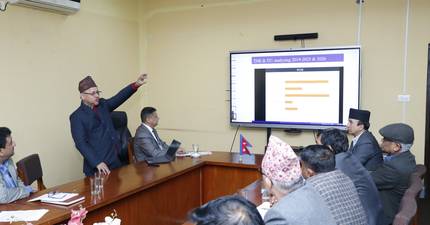
During a group discussion, Dr. Deepak Kumar Khadka, chairman of the Nepal Policy Research Institute, stated that efforts are underway to incorporate the multi-dimensional aspects of knowledge into policy. He highlighted the need for coordination between society, educational institutions, and policy-making bodies, assuring that issues raised during the workshop will be considered for future policy discussions.
The Value of Local Knowledge
Purbanchal University’s Vice-Chancellor, Prof. Dr. Biju Thapaliya, shared that his university honors the diverse contributions of its faculty by respecting the diversity of knowledge and is working to further refine this approach.
Former Vice-Chancellor of Tribhuvan University, Prof. Dr. Shiva Lal Bhusal, reflected on past initiatives to connect academia with society at TU and emphasized the importance of further work in this area. He cautioned against viewing international publication as the sole purpose of research.
Similarly, Dr. Amina Singh of Kathmandu University encouraged educators to question whether their pursuit of research devalues the vast sources of knowledge already available to them. She urged a greater awareness of local knowledge while considering the impact of their work.
Empowering Educators and Students
Associate Professor Dr. Ganga Ram Gautam of Tribhuvan University underscored the importance for teachers to have a clear vision for their future professional development. Facilitating the teaching-focused part of the workshop, he explained that embracing inquiry-based learning can drive positive transformation.
Prof. Dr. Shyam Sharma from the State University of New York emphasized the need to recognize and value the contributions and impact of both research and teaching. He noted that higher education teachers contribute in multi-dimensional ways to knowledge production, application, and integration and called for this to be recognized in policy. Dr. Sharma also advised that artificial intelligence (AI) should only be used to enhance one's skills and the quality of research.
Assistant Professor Dr. Bandana Jain of TU highlighted the fact that people gain and share knowledge from their social environments, including culture, language, and local customs.
In his closing remarks, Surendra Subedi, the campus chief of KMC, urged educators to continually question their purpose, the impact of their work, and their personal feelings about it. He suggested that setting clear goals can make the teaching-learning process more engaging and create a more conducive learning environment.
The workshop was facilitated by a team that included Surendra Subedi, Prof. Dr. Shyam Sharma, Dr. Ganga Ram Gautam, Dr. Amina Singh, Dr. Reshma Tuladhar, and Dr. Bandana Jain.