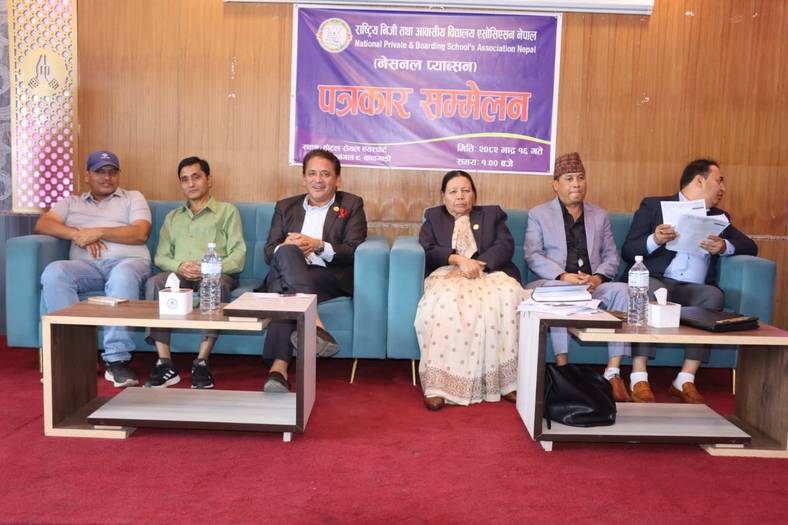

National PABSAN has called on the government, parliament, and other stakeholders to reconsider several provisions in the proposed School Education Bill now under discussion in the Federal Parliament.
The association says that while reform is necessary, some proposals could create impractical challenges for private schools that have operated across the country for decades. National PABSAN has held meetings with the President, the Education Minister, parliamentary committees, and leaders from multiple political parties, and says it has received positive assurances while continuing to push for amendments.
Major concerns raised
- Registration and operation: Private schools registered under the Office of the Company Registrar should continue to be allowed to operate as companies in the future.
- Scholarship provision: The current practice of providing 10 percent scholarships should remain. Requiring “full scholarship” would likely force fee hikes, shifting the burden to low and middle income parents.
- School classification: Schools are already categorized as special, A, B, C, and D based on size, fees, and facilities. Scholarship distribution and salary obligations should reflect these differences.
- Profit and management: Gradually converting company-registered schools into non-profit entities contradicts established company principles and could hinder infrastructure and educational development.
- Pre-primary education: International practice recognizes three years of early childhood education for ages 3 to 6. Limiting this to two years would weaken early learning foundations.
- Approval process: Instead of annual grade-by-grade approvals, schools should receive level-wise approvals to reduce administrative and financial burdens.
- Teacher pay and social security: Many mid- and lower-tier schools cannot fully implement proposed salary and social security provisions. National PABSAN says these should be voluntary for smaller schools.
- Higher education scholarships: Requiring students to have studied in community schools from grades 6 to 10 to qualify for university scholarships is unfair to private school students and should be removed.
Education as a fundamental right
Citing Article 31 of the Constitution, which guarantees compulsory and free education up to the secondary level, National PABSAN noted that private schools educate about 34 percent of students. The role of private investment should be regulated and managed without being undermined.
Commitment to modern, values-based education
National PABSAN says it is advancing modern, globally relevant learning by introducing AI-aligned curricula, digital classrooms, and child-friendly pedagogy, while also promoting values-based education rooted in Eastern philosophy.
Amid rising student and professional outmigration, the association emphasized developing Nepal as an education hub to retain talent and support the national economy. Reiterating that it does not support school closures or strikes, National PABSAN urged stakeholders to ensure the bill becomes a milestone for students, parents, private investors, and the broader education sector.