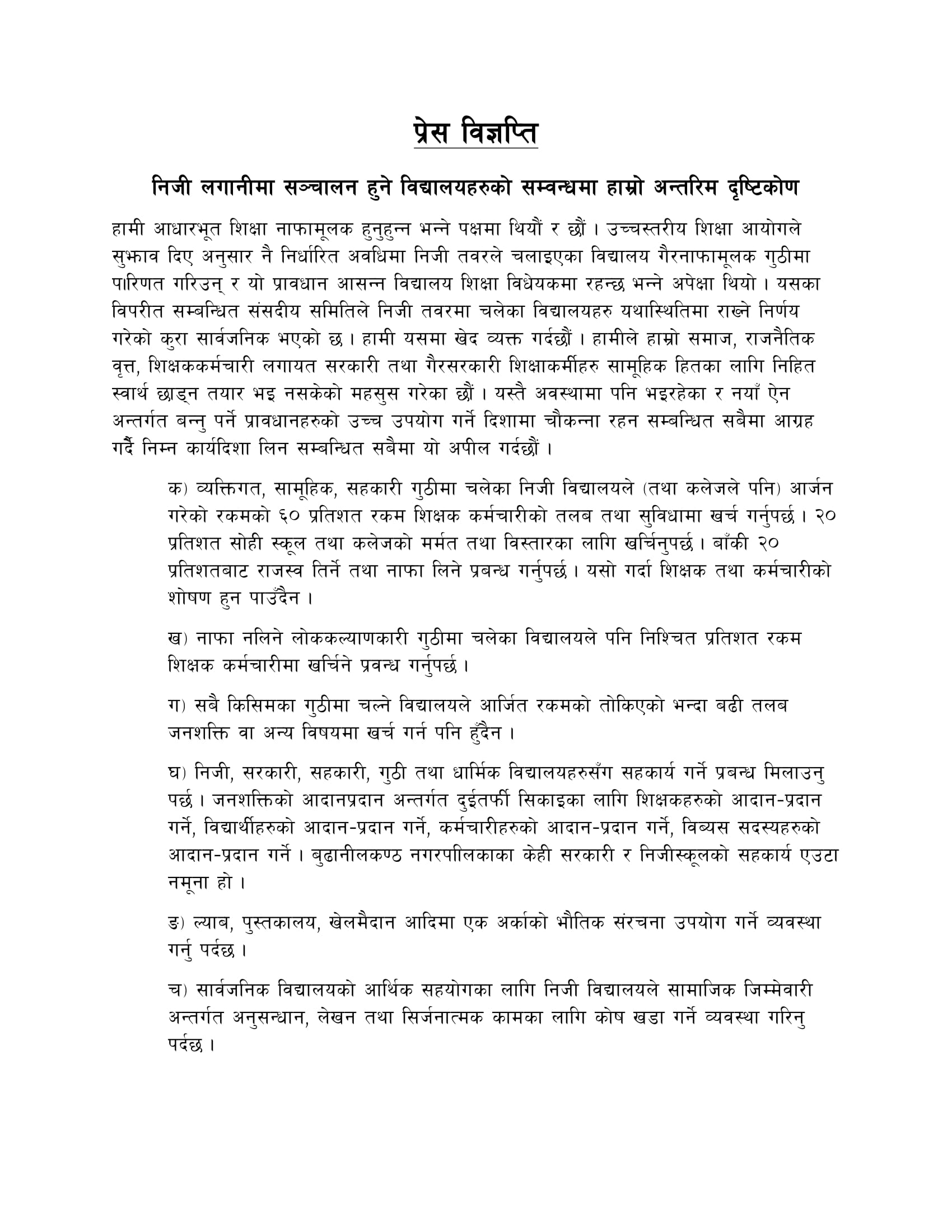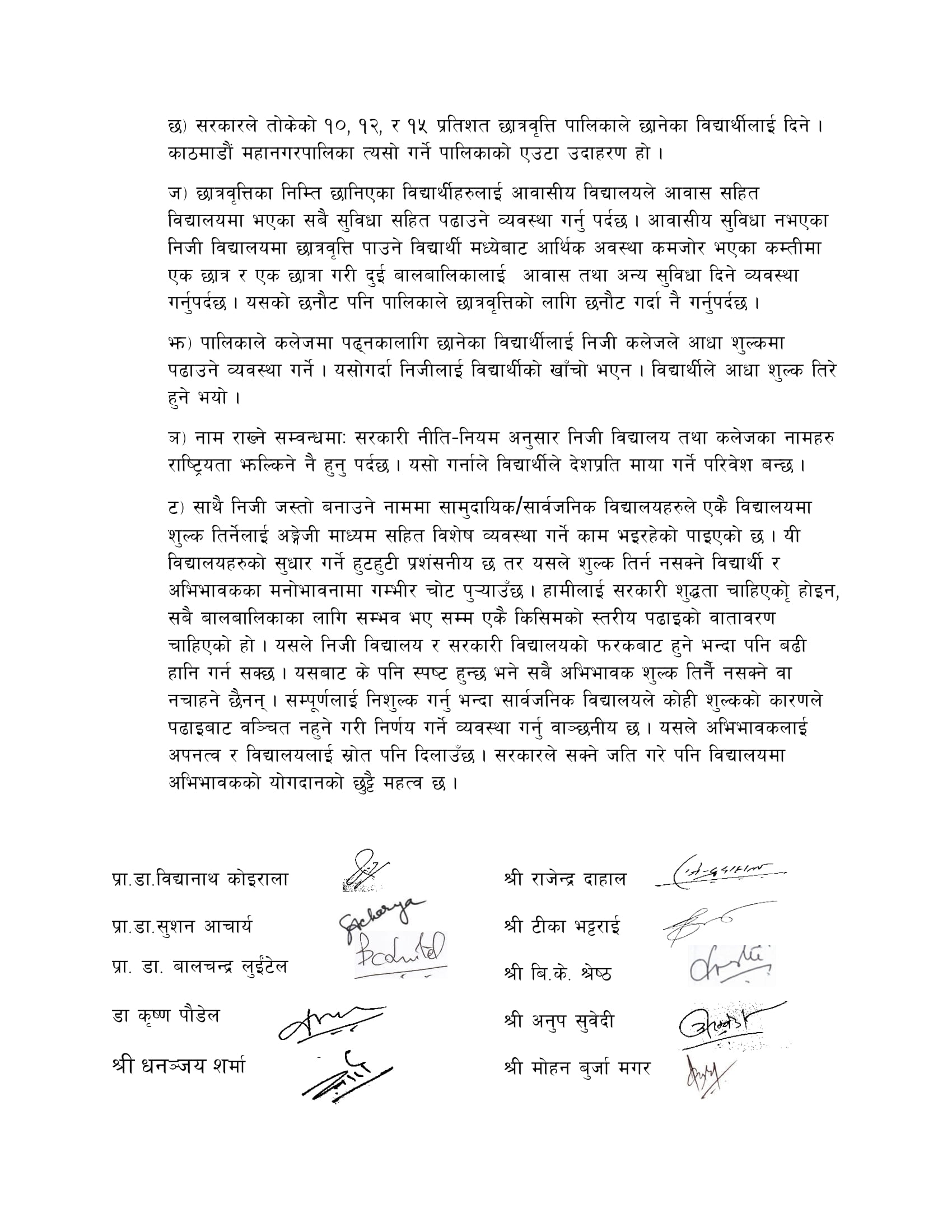

KATHMANDU – A group of prominent Nepali educators has released a press statement expressing disappointment with a parliamentary committee's decision to maintain the current for-profit model of private schools. The group, including respected academics like Prof. Dr. Bidya Nath Koirala and Prof. Dr. Bal Chandra Luitel, called the decision a step backward and highlighted a collective failure to prioritize the public good over vested interests.
The educators’ statement outlines a new set of guidelines for private schools, emphasizing that basic education should not be a for-profit enterprise. They propose a number of reforms aimed at improving the quality and equity of education across the country.
Key Recommendations
The press release details several actionable points to create a more equitable education system:
- Financial Transparency and Teacher Compensation: Private schools should be required to spend at least 60% of their income on teacher and staff salaries and benefits. The remaining 20% should be used for maintenance or expansion. Another remaining 20% should be used for profits and government tax. This is intended to combat the exploitation of educators.
- Welfare and Non-Profit Schools: Even non-profit, public welfare schools should have a mandated percentage of their income dedicated to their staff.
- Resource and Personnel Sharing: The statement urges collaboration between private, public, and other types of schools. It suggests sharing human resources, such as teachers and staff, as well as physical resources, including labs, libraries, and playgrounds. The Budhanilkantha Municipality is cited as a successful model of this kind of collaboration.
- Social Responsibility: Private schools should be mandated to create a fund for research, writing, and creative work as a form of social responsibility to financially support public schools.
- Scholarship System: The educators recommend that private schools adhere to government-mandated scholarship percentages for students selected by the local municipality, citing Kathmandu Metropolitan City as a positive example.
- No Two-Tier System: The press release criticizes the trend of public schools creating a separate, fee-based, English-medium class within the same institution. This practice, the authors argue, undermines the principle of equal, quality education for all children and can cause emotional distress for students who cannot afford the fees. The educators emphasize that the goal should not be to make public schools "like private schools" but to provide one consistent, high-quality learning environment for all children.
The press release concludes by appealing to all stakeholders to be vigilant and work toward a more equitable and unified education system for the benefit of all citizens.
Refer to the press release here: