
ClosesJanuary 29, 2026
Kathmandu School of Law (KSL), affiliated with Purbanchal University, is a leading law college in Nepal. It is the first law school in the country to be accredited by the University Grants Commission (UGC) under the Quality Assurance and Accreditation (QAA) system. KSL received its accreditation on 23 June 2022, which will remain valid until 22 June 2027.
Salient Features
- QAA-Accredited Law Institution
The first law college in Nepal to be accredited by the University Grants Commission for maintaining high academic standards and institutional quality. - Integrated Legal Education with Practical Focus
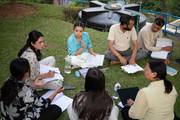
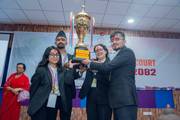
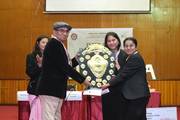
Emphasis on clinical legal education through fieldwork, moot court practice, and research-based learning across all years of study. - Onboarding Research for First-Year Students
An introductory research program is conducted immediately after admission, helping students build academic orientation and research skills from day one. - Active Student Committees and Leadership Development
Student-led bodies like the Moot Court Committee, Research Organizing Committee, Editorial Team of KSL Review, and Cognitive Club provide leadership and event management experience. - Paid Internship Opportunities
Every year, over 10 students are selected for paid internships, providing valuable professional experience alongside academic learning. - National and International Engagement
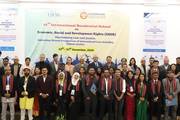
Regular hosting and participation in conferences, seminars, and academic exchanges, offering students a platform to present research and build networks. - Residential Learning Program
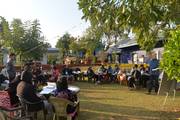
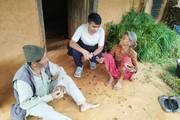
Unique off-campus academic sessions conducted at the Bhakunde Residential Campus in Kavre that blend classroom learning with local research and social engagement. - Support for Research and Creativity
Institutional grants such as the Student Research Grant and Creativity Exposure Grant encourage academic exploration and innovation. - Modern Academic Infrastructure
Digitally enabled classrooms, a well-resourced library, IT Resource Centre, and a state-of-the-art international seminar hall create an effective learning environment. - Experienced Faculty and Expert Sessions
Courses are delivered by qualified faculty, complemented by guest lectures and expert-led workshops from national and international professionals.
Admission Guidelines
Eligibility Criteria
- Minimum C+ GPA or 50% marks in +2 or equivalent level.
- For A-Level graduates: Minimum 3.5 GCE credits.
Application Process
- Online Application Form
- Fill out the application form through the official KSL online portal.
- Entrance Examination
- Conducted by Kathmandu School of Law.
- Includes both a written examination and an interview.
- Evaluation Criteria
- Applicants will be assessed based on:
- Submitted application form
- Performance in the written exam
- Interview results
- Applicants will be assessed based on:
- Merit List and Admission
- A merit list will be published following the evaluation.
- Selected candidates can proceed with the admission process as per the notice.
SCHOLARSHIP INFORMATION
- Merit-Based Scholarship
- The top three candidates in the B.A. LL.B. entrance exam recipients receive merit-based scholarships, encouraging academic excellence from the start.
- Awarded to academically outstanding students.
- Reserved Quota Scholarship
- Aimed at promoting inclusion and diversity.
- Available for students from the following groups:
- Dalit
- Indigenous Nationalities
- Students from remote areas
- Persons with disabilities
- Women
- Economically disadvantaged groups
- Families of the disappeared or martyrs
- Injured during the People's Movement or Madhes Movement
- Madhesi
- Muslim
- Conflict-affected and displaced
- Former Kamaiya/Haliya
- Single Women
Fellowships and Special Scholarships
- Prof. Madhav Prasad Acharya Fellowship
- Jeena Maharjan Student Advocacy Practice Stipend
- Balaram Kafle Scholarship
- Nepali Civilization Study Fellowship
- Sher Bahadur Basnet Employee Child Fellowship
- Moot Court Best Oralist Fellowship
- Moot Court Best Research Fellowship
- Gajendra Keshari Bastola Fellowship
- Ramananda Prasad Singh (Tharu) Study Fellowship
- Rudra Bahadur Singh Study Fellowship
- Suryabinayak-4 Resident Student Fellowship
Note: To apply for any scholarship or fellowship, students must first fill out the scholarship application form. Selection will be based on a written examination followed by an interview conducted by the college.
- Purbanchal University
- ✓ QAA Certified by UGC
- Established 2000 AD
- 01-6634455, 01-6634663
- info@ksl.edu.np
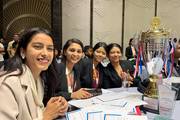
- Kathmandu School of Law Wins Prestigious Cherif Bassiouni Award at Jessup Moot Court Competition
- Kathmandu School of Law Concludes Limbu and Magar Language Culture Fair 2082
- Kathmandu School of Law Hosts Intra-KSL Cricsal Tournament 2082
- Kathmandu School of Law Organizes Prison Visit for BALLB 2nd Year Students as Part of Experiential Learning