

Saraswati Puja, also known as Basanta Panchami or Shree Panchami, holds special significance in Nepal’s education culture. Observed on the fifth day of the waxing moon in the month of Magh, the day symbolizes the arrival of spring and, more importantly, the formal celebration of learning, knowledge, and wisdom.
For students, parents, and educators, Saraswati Puja is not merely a religious observance but a reminder of the foundational role education plays in personal growth and national development.
Akshararambha: Initiating Children into Education
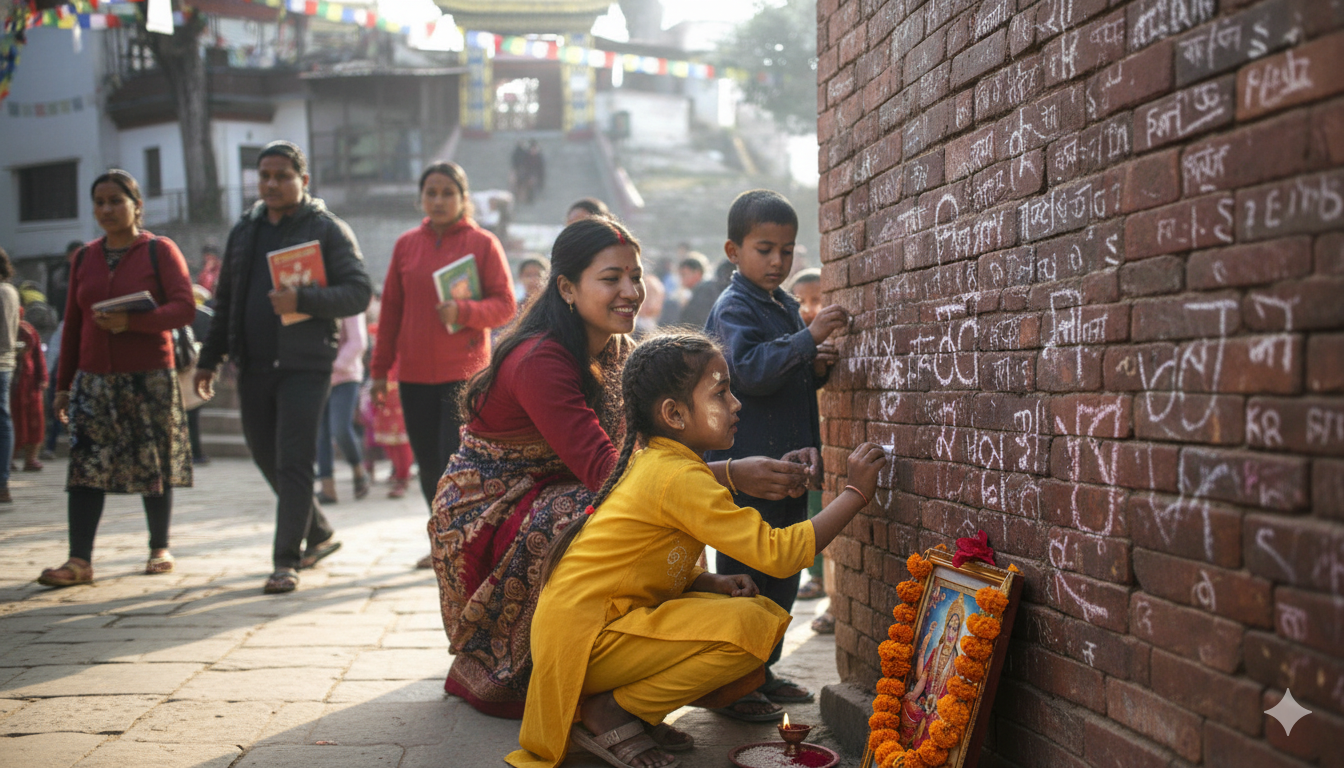
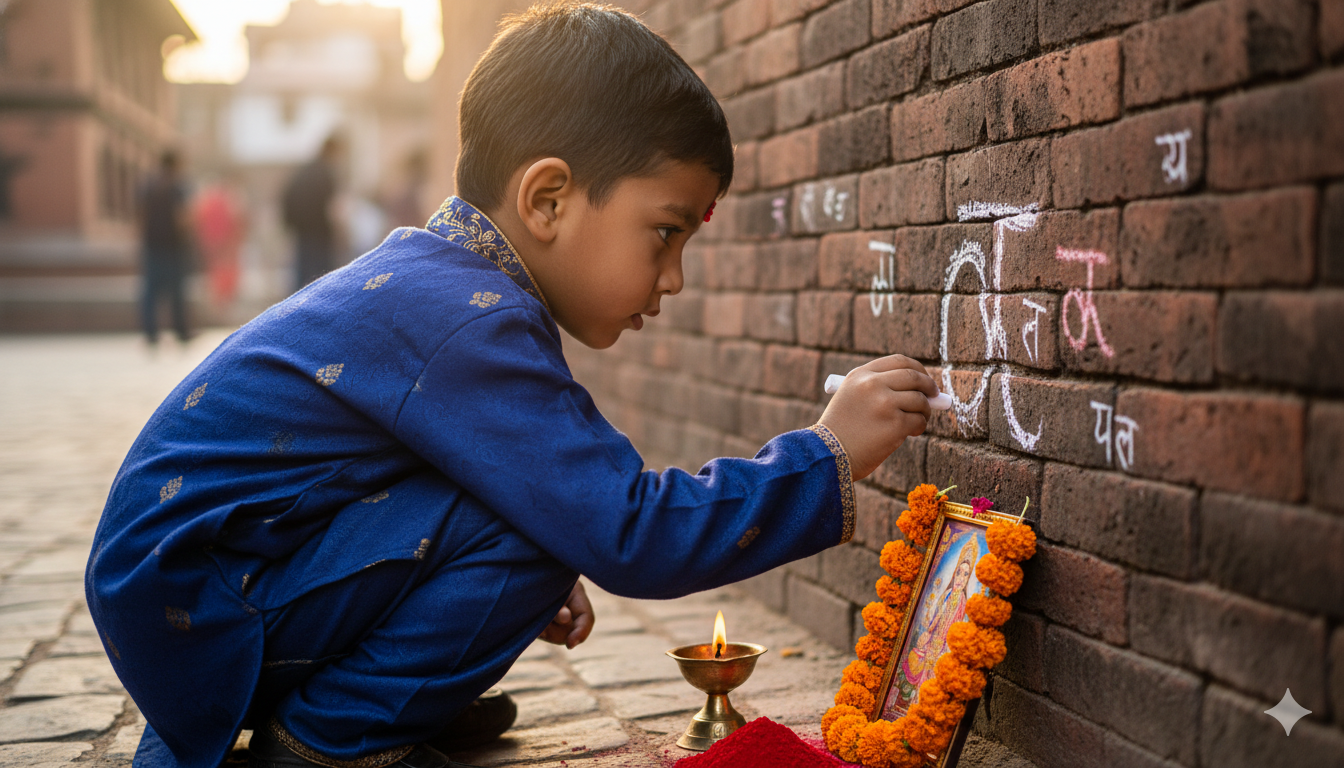
One of the most meaningful education-related traditions observed on Saraswati Puja is Akshararambha, the ritual initiation of young children into learning. On this day, toddlers are guided to write their first letters, marking the symbolic start of their educational journey.
Because of this tradition, many families choose Saraswati Puja as the ideal day to enroll their children in Pre-school or Early Childhood Education programs. Educational institutions also acknowledge the day as an appropriate time to welcome new learners, reinforcing the belief that learning begun on this occasion leads to intellectual growth and discipline.
How Saraswati Puja is Observed in Nepali Schools and Colleges
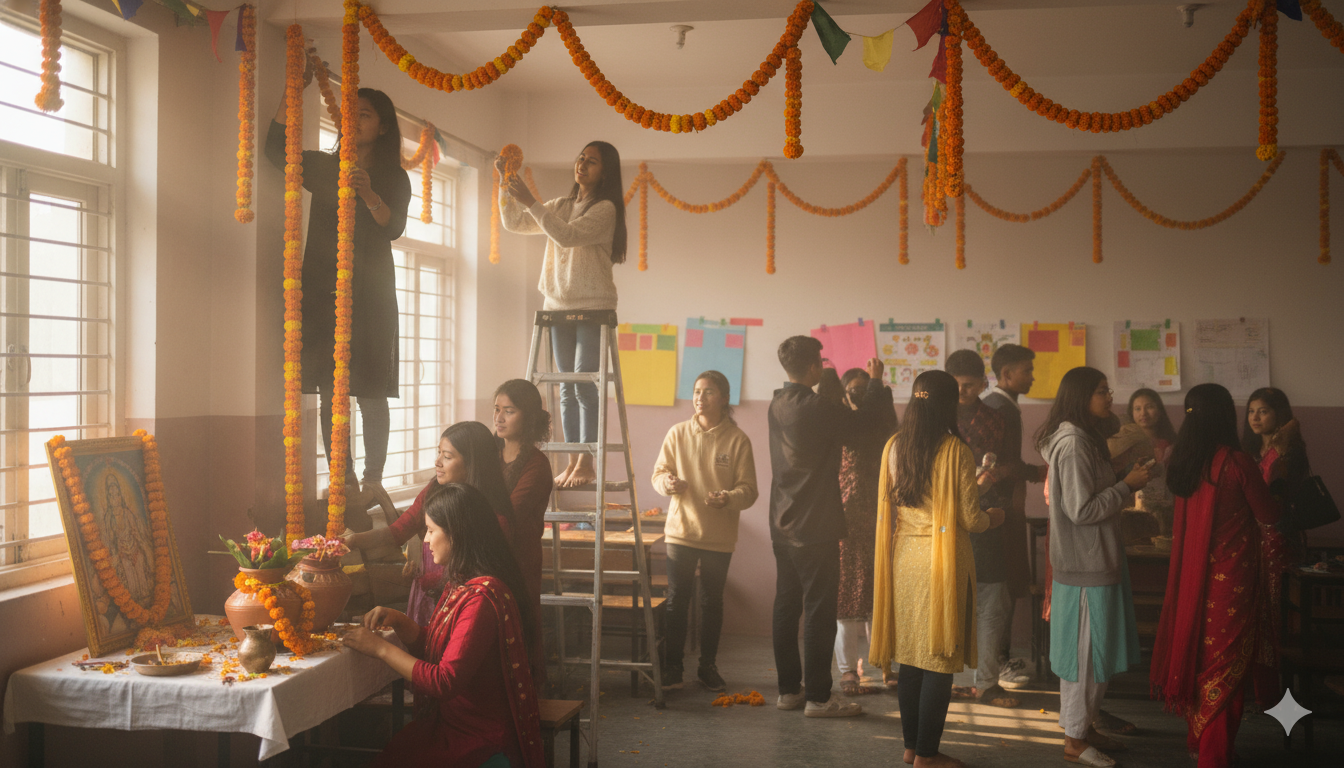
Schools and colleges across Nepal mark Saraswati Puja through prayer programs, orientation sessions, and academic-themed activities. Learning tools such as books, notebooks, musical instruments, and art materials are worshipped, highlighting respect for education itself rather than ritual alone.
Many schools in Nepal use the occasion to reconnect students with the purpose of education beyond examinations, emphasizing creativity, ethics, and lifelong learning. For younger students, the day often becomes their first structured interaction with a formal learning environment.
An Auspicious Day for Academic and Professional Beginnings
Saraswati Puja is widely regarded as an auspicious day to begin new academic and professional pursuits. Students initiate new courses, skill-based training, and artistic education, while institutions may launch new programs or academic sessions.
Parents and learners also view the day as suitable for making key education-related decisions, such as school selection, admission planning, and career orientation. This makes the Saraswati Puja particularly relevant for families exploring school admissions, academic programs, or skill-based courses.
Reinforcing the Value of Knowledge in Society
The festival reinforces the cultural belief that education is not limited to textbooks or classrooms. Goddess Saraswati represents knowledge across disciplines, including language, science, music, art, and critical thinking, reflecting a holistic understanding of learning.
In Nepal’s context, Saraswati Puja serves as an annual reminder of the importance of nurturing curiosity, creativity, and ethical understanding at every level of education, from early childhood to higher studies.

Education as a Lifelong Commitment
While Saraswati Puja is often associated with children and students, its message extends to learners of all ages. The day encourages reflection on personal learning goals, academic discipline, and the role of education in shaping responsible citizens.
As Nepal continues to expand access to quality education and diversify learning pathways, Saraswati Puja remains a culturally rooted occasion that highlights education as a lifelong commitment rather than a phase confined to school years.